“You could leave life right now. Let that determine what you do and say and think.”
– Marcus Aurelius
I went to the oral surgeon last week to get a wisdom tooth pulled that wasn’t ready to come out when I was 15. I remember the doctor telling me back in 1995, “Someday, this is going to need to come out,” and me thinking, “That’s so far in the future I will never need to think about this,” before never thinking about it again.
After a few lectures from my dentist about why it was time for an extraction, I finally relented and booked an appointment. I entered the office prepared for a routine, albeit unpleasant, experience.
I left a different person.
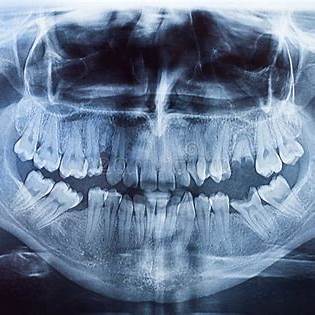
The medical assistant led me to an operating room, then sat me in front of a big-screen television with a giant skeletal image of my mouth. In the upper right, it read: “Rory Hughes: 46 years and 107 days old.”
Underneath, two alerts highlighted in red:
Family history of cancer.
Family history of mental problems.
I’d been reduced to no more than a vessel of generational maladies.
Next, the medical assistant jammed a tube up my nose and told me to breathe deeply so the nitrous could do its job. “You’ll be fully conscious, but this will take the edge off.”
I kept a soft gaze on the screen, which started to feel like a really sad obituary.
Nitrous is known as laughing gas, but there was nothing funny about its effect on me. I was fully conscious, but I sensed an apparition floating above me, observing a body, which was observing a giant screen. I began to panic—was I to be the first person to die of a laughing gas overdose, without actually laughing?
After an extended stretch of increased panic, the doctor arrived. “This should be quick. Just keep breathing through your nose, and you’ll get through this.” You’ll get through this? That sounded overstated for a single tooth extraction.
My eyes were still fixed on the death screen, refusing to close—right up until the surgeon started twisting my tooth out like a stripped screw. Thanks to the Novocaine, I could only feel pressure as my head jerked, but I could hear squeaking and pulling and twisting.
Something happened as the doctor rooted around in my mouth while I gazed at that digital tombstone.
What if I die right here, the first person ever to die of a pulled tooth?
How did those 30 years go by so quickly?
What was death like for my grandfather, who died when he was just 40?
I’m scared of this? How is my buddy coping with a cancer diagnosis at age 44?
I’m too old for this. Oh wait, no I’m not.
And before I could completely lose it, I was sitting up, a warm pool of blood collecting in the hole where my tooth had been.
I walked out of that office shaken. Somehow my kids seemed older. My life seemed shorter—as if the doctor had removed not only my tooth, but also my innocence.
Maybe back in 1995, what that dentist was really saying was, “No one is guaranteed another 30 years. Make the most of it.”
I’ve had my first colonoscopy. I’m being told to do more strength training, eat healthier, drink less. My optometrist said the bifocals are coming for me. I wake up every morning a little slower to get out of bed. I’m scared to go skiing.
Thirty more years, and I’ll be 76—the exact life expectancy for an American male. In those thirty years I’ll probably lose some more teeth, but I will also lose my dog, my parents, my mobility, 50 yards off my tee shot, and the rest of my hair.
I didn’t expect a wisdom tooth to reteach an important lesson in mortality. The challenge now? Keep that reminder as present in my mind as the hole in my mouth.


Leave a reply to Rory Cancel reply